
XR4ED – Ecopoly XR Edition
As Open Call winner from the Horizon Europe project XR4ED, I used extended reality to support environmental and sustainability education. The question: can XR technology make environmental concepts more tangible and engaging — and can it extend an existing physical game to reach a wider audience?
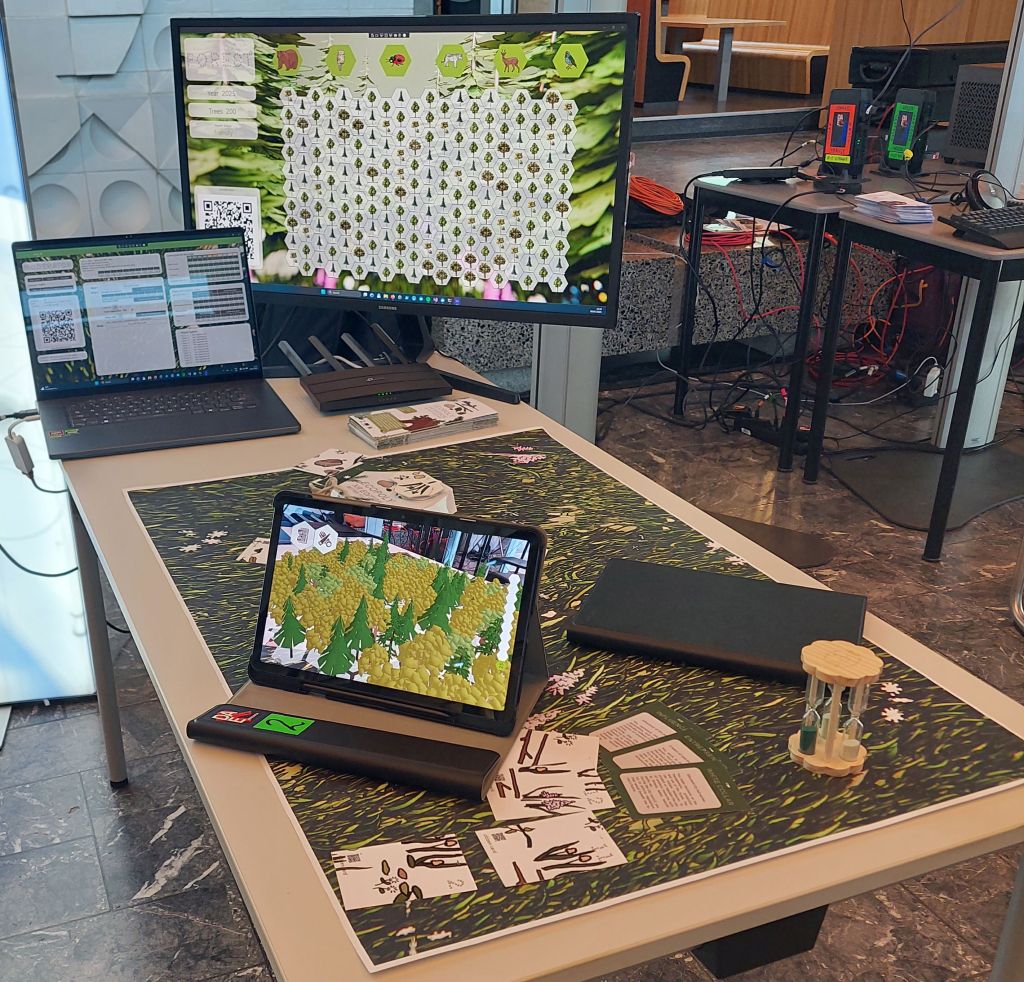
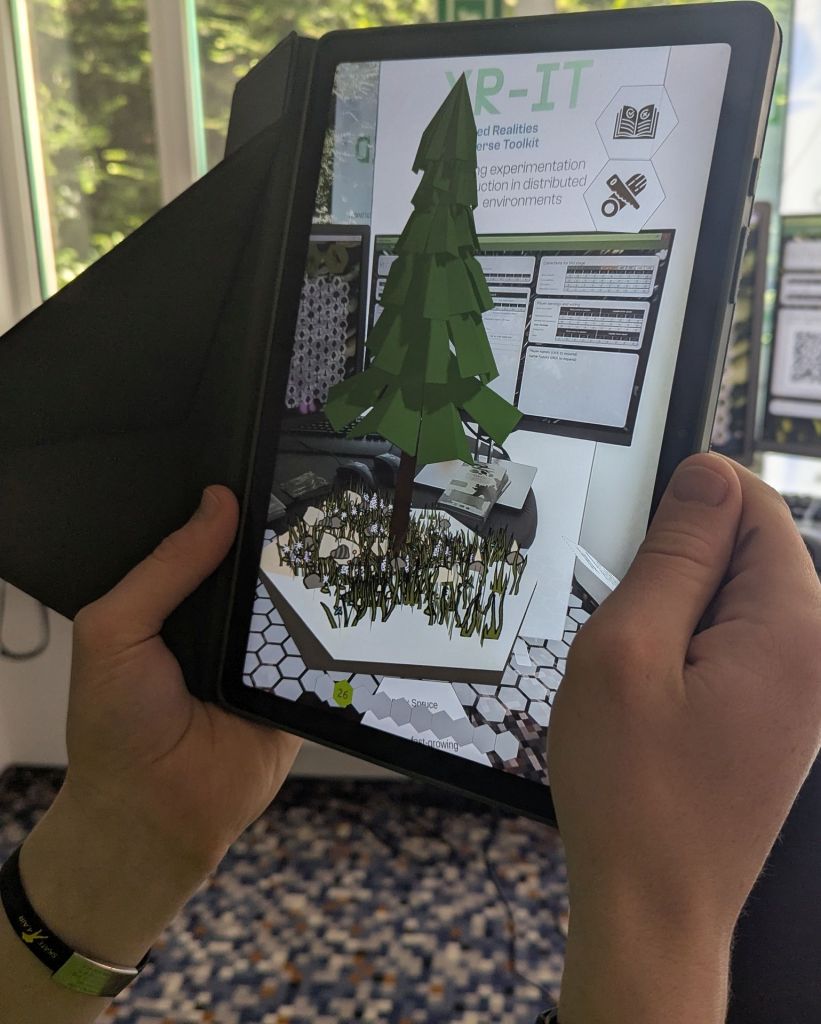
The platform built here combined a physical board game with a real-time AR layer on Android, a REST-based game service coordinating game state, and a backend capable of supporting the field deployment and data collection required for the research protocol.
Architecture work
The integration challenge was making a multiplayer XR game that can be played in a classroom setting – little time to explain or learn the game – that must run smoothly and can be easily managed by a moderator while playing the game with the group. The architecture defined the game state model, the REST service interface, and the Android AR integration — keeping the interaction interesting and engaging for players aged 10 and up while supporting the data collection and session management needed for the pilot research protocol.
Consortium delivery
Virtual Frontier was the sole architect and technical lead. The project involved international partners; coordination, deliverable reporting, and milestone management were handled as part of the role. We ran 11 public pilots with 90 participants aged 11-38 across the project period.
Credentials demonstrated
Horizon Europe Open Call delivery, international consortium coordination, deliverable and milestone management, AR platform architecture, field deployment, evaluated with diverse user groups.
References
XR4ED parent project on CORDIS: cordis.europa.eu/project/id/101093159
Virtual Frontier’s sub-project (ECO-EXT) on the XR4ED project site: xr4ed.eu/winning-projects/
Note: CORDIS lists the parent consortium, not sub-grantees.
More information on Ecopoly can be found on the case study page.
Ecopoly XR Edition was created in the ECO-EXT project, which has indirectly received funding from the European Union’s Horizon Europe research and innovation action programme, via the XR4ED – Open Call issued and executed under the XR4ED project (Grant Agreement no. 101093159).




 Virtual Frontier